
TradingGuru: Trading Simulator
Crypto Guru Trading Academy and SimulatorFinance
4.791.00 Reviews
- Version
- 1.0.8
- Installs
- 500.00K
- Age Rating
- Mature 17+
Screenshots
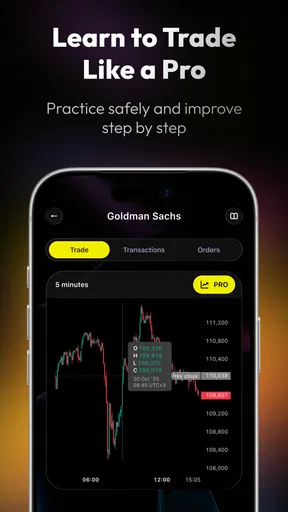
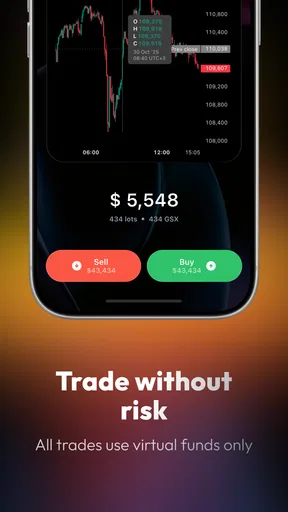
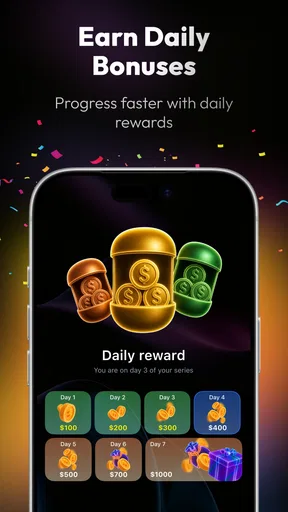
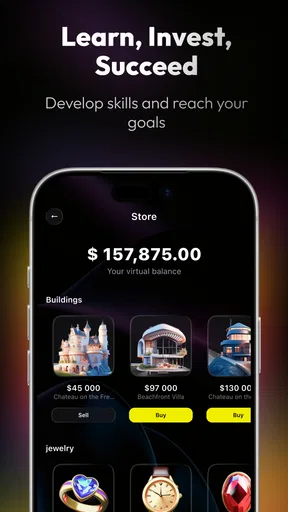
Our Review of TradingGuru: Trading Simulator
 Analysis by Appyee
I approached TradingGuru: Trading Simulator as a practice tool rather than a shortcut to making money. That distinction matters. This free finance app, created by Crypto Guru Trading Academy and Simulator, is built around the idea of learning stock trading in a safer simulated setting, so its real value depends less on a quick first impression and more on whether it helps you form better habits over time.
My first reaction was positive because the purpose is easy to understand. Instead of asking a beginner to risk cash immediately, it gives the learning process a separate space. The app has attracted over 500 thousand installs and holds a 4.7 average from around 4 thousand ratings, which suggests that the basic concept connects with many people. I can also see why: opening a simulator feels much less intimidating than opening a brokerage account and immediately facing real financial consequences.
Still, I would not treat that popularity as proof that it can replace a proper investing education platform or a regulated broker. It is best understood as a training companion. Whether it earns a permanent place on your phone depends on how deliberately you use it after the novelty of simulated trading wears off.
What the first week feels like
The first week is where the app has its strongest appeal. A new user can focus on the language and rhythm of trading without the emotional pressure attached to real losses. That makes it useful for someone who has watched market videos, read about stocks, or heard friends discuss trading but still does not know how to turn theory into a repeatable process.
I especially like the psychological distance created by simulation. A beginner can test an idea, see how a decision develops, and think about what went wrong without immediately blaming a real bank balance. That does not remove risk from trading, but it creates room to notice impulsive behavior. Do you enter because you have a reason, or because a price movement makes you feel late? Do you change your plan after a small setback? A simulator can expose those habits earlier than real-money trading usually does.
During an initial practice session, I would recommend choosing one narrow objective instead of trying to become an expert at everything. For example, use the app to observe how you react when a position moves against you. Another useful exercise is to write down the reason for each simulated decision before checking whether it worked. The result is more valuable when the focus is on process rather than on celebrating a profitable outcome.
The app’s short store description is simply “TradingGuru,” while its broader presentation centers on mastering stock trading safely, building a strategy, and growing as a trader. I found the more specific idea much more useful than the name alone: the app makes sense when you give it a learning assignment. Without one, simulated buying and selling can become a shallow guessing game.
A practical beginner routine
A realistic everyday scenario would be a commuter who has fifteen minutes after work and wants to understand trading before risking savings. That person could open the simulator, review a small group of decisions, and record why an entry or exit seemed attractive. The next day, the user could compare the original reasoning with the result rather than simply looking at whether the account went up or down.
This routine has an important advantage over casually scrolling through market commentary: it forces a decision. Reading about trading can create the feeling of progress without testing judgment. A simulator turns that passive interest into a controlled experiment. I would keep the sessions short, because long sessions encourage overtrading and make random activity feel like productive study.
One non-obvious benefit is that simulated trading can help separate two questions that beginners often mix together. The first is whether an idea sounds sensible. The second is whether the person can follow that idea consistently. An app like this is more useful for examining the second question than for proving that a strategy will work in the real market.
The first-week weakness is closely connected to that strength. Because there is no immediate financial consequence, users may take actions they would never take with real money. A practice result can therefore be encouraging without being realistic. I would not use a winning run as evidence that I was ready to trade live. I would use it as a prompt to inspect the decisions that produced it.
Whether it remains useful after the first month
After the opening excitement, the app has to earn its place through repetition. This is where many trading simulators lose their appeal. The basic action of making a virtual decision is interesting at first, but it becomes repetitive if every session has the same purpose. In my view, TradingGuru has lasting value only when you turn it into a structured review tool instead of a source of quick entertainment.
A good month-to-month workflow would rotate the focus. One week might be about avoiding impulsive entries. Another could examine how consistently you follow a chosen rule. Later, you might review whether you are changing decisions after short-term movement. The app becomes more meaningful when each session answers a specific question about your behavior.
I would also separate practice from evaluation. During a practice period, the goal is to make decisions under a defined plan. During an evaluation period, the goal is to look back and identify repeated mistakes. Mixing those activities can lead to constant strategy changes, because every disappointing result feels like a reason to invent a new approach.
That is one of the strongest long-term insights I took from using a simulator: the tool is often better at revealing inconsistency than discovering a perfect strategy. If you repeatedly abandon an idea after a small setback, the central issue may not be the idea itself. It may be position sizing, patience, or a need for clearer rules. A simulator gives you a place to notice that pattern before real money makes the lesson more expensive.
For someone studying finance, the app can also serve as a companion to outside learning. I would read a concept elsewhere, translate it into a simple practice rule, and then use the simulator to see whether I can apply that rule consistently. This is a better use than copying random market opinions into virtual trades. The app cannot make a vague idea precise for you; you have to supply that discipline.
There is a trade-off here. A simulator can encourage careful thinking, but it can also create a false sense of control. Real markets include emotional pressure, changing information, and consequences that a practice environment cannot fully reproduce. Even if the app helps you follow a plan perfectly, that does not establish that the plan is suitable for your finances or risk tolerance.
Who gets recurring value
I think the strongest audience is made up of beginners who want a low-pressure place to rehearse decisions, students exploring market concepts, and cautious users who know they are not ready to risk savings. It can also help people who have already made impulsive choices and want to understand their own behavior before returning to live investing.
More experienced traders may find it useful for testing discipline, but they are less likely to need it as a primary learning environment. Someone looking for live execution, detailed research, tax records, portfolio management, or direct access to financial markets should look toward a brokerage or dedicated analysis service instead. Those tools serve a different purpose, and a simulator should not be judged as though it were a complete investment account.
I would also skip it if your main goal is a quick route to profit. The app’s educational framing is more suitable for building judgment than for producing immediate financial results. Anyone who treats virtual success as a promise of real returns is using it in the wrong way.
The maintenance burden is small, but the discipline is not
From a phone-maintenance perspective, the app is easy to keep around. It is free, runs on Android version 8.0 or later, and the current release is version 1.0.8. That makes it accessible to people using older compatible devices, although the age rating is Mature 17+, so it is not positioned as a children’s learning app.
The real maintenance burden is behavioral. To get value, you need to return with a reason. A simulator does not become educational merely because it remains installed. I would schedule a short review once or twice a week, then remove it from the routine when the session no longer produces a useful observation. This prevents the app from turning into a reflexive checking habit.
One practical tip is to maintain a separate decision log, even if it is only a simple note on your phone. Record the idea, the reason for acting, the condition that would make you change course, and what you learned afterward. The simulator provides the practice environment, but an external record makes progress easier to see. Without that record, users may remember dramatic wins and losses while forgetting the ordinary decisions that reveal their real habits.
Another useful rule is to review decisions at a fixed interval rather than reacting to every movement. Constant checking can make a practice account feel like an urgent responsibility. That is counterproductive for beginners because it rewards attention-seeking behavior instead of patience. A calmer review schedule makes it easier to judge whether the original reasoning held up.
I would also avoid resetting the experience whenever the result becomes uncomfortable. Starting again can feel clean, but it removes evidence of mistakes. If the app allows you to continue with an imperfect record, that is more educational than repeatedly creating a fresh beginning. The point is not to preserve a flattering result; it is to understand how your choices develop over time.
The developer name, Crypto Guru Trading Academy and Simulator, makes the educational and simulation angle clear, but I would still keep the app in its proper place. A developer identity that includes “academy” does not turn practice into personalized financial advice. I would use the app to rehearse general decision-making and continue checking reliable educational sources before making real investment choices.
Where fatigue begins
The largest source of fatigue is repetition without reflection. If every visit consists of opening the app, making a virtual trade, and checking the result, the experience can become mechanical. That pattern may feel active, but it does not necessarily improve judgment. The novelty fades quickly when the user has no new question to investigate.
A second problem is the emotional mismatch between simulated and real decisions. Winning can become too easy to enjoy, while losing can become too easy to dismiss. In live trading, both outcomes affect a person’s plans and emotions. In a simulator, the absence of those consequences can encourage oversized confidence. I would treat every result as incomplete evidence, not as a verdict on my ability.
There is also a risk of confusing activity with learning. A user may make many decisions and still fail to understand why they were made. More practice is not automatically better practice. I would rather complete a small number of clearly explained exercises than fill a session with hurried guesses.
Another limitation is that a simulator cannot answer every question a real investor has. It does not replace learning about fees, taxes, account types, personal goals, emergency savings, or the difference between short-term speculation and long-term investing. Those subjects matter when money is real. If your decision depends on one of them, the app should be only one part of your preparation.
Compared with a standard brokerage app, TradingGuru is less appropriate for executing an actual investment plan but safer for rehearsal. Compared with a spreadsheet, it is likely more approachable for someone who wants a guided-feeling practice space, while a spreadsheet offers greater control over personal records and calculations. Compared with market news apps, it is more action-oriented but less useful for simply following events. I see it as a bridge between reading about markets and understanding how I behave when asked to make a decision.
That comparison also explains when another option is better. Choose a brokerage when you are ready to handle real transactions and understand the consequences. Choose a spreadsheet when you want to build a highly customized journal. Choose an educational course or book when your main gap is foundational knowledge. Choose this simulator when the missing skill is practice under a defined set of rules.
My long-term verdict
After the first-week appeal fades, I would keep TradingGuru installed only if I were actively working on a specific trading habit. Its lasting strength is not the excitement of virtual wins. It is the chance to slow down, test a decision process, and notice whether I follow my own rules. That makes it more valuable as a quiet training aid than as a daily market game.
The free price lowers the barrier to trying it, and the broad adoption reflected by over 500 thousand installs and a 4.7 average gives it a reassuring first impression. The Mature 17+ rating is also a useful reminder that the subject is serious, even though the environment is simulated. I would still judge it by the quality of my routine, not by the numbers attached to its listing.
My recommendation is straightforward: install it if you are curious about stock trading, nervous about beginning, or trying to replace impulsive decisions with a repeatable process. Start with a narrow goal, keep a decision log, review patterns instead of isolated outcomes, and do not confuse practice profits with readiness for real money.
I would pass on it if you want live trading, professional research, personalized advice, or a complete portfolio solution. It cannot carry those responsibilities for you. But for a beginner who wants a low-cost place to rehearse and examine behavior, it can earn a lasting role—provided you use it deliberately rather than opening it simply because checking prices has become a habit.
My final view: TradingGuru: Trading Simulator is worth keeping as a structured practice companion, not as a substitute for investing knowledge or a real brokerage account. That is a narrower promise than instant success, but it is also the reason I find the app useful.
Verdict
Strengths of TradingGuru: Trading Simulator
- Risk-free practice with virtual money and realistic market scenarios.
- Useful for beginners learning trading basics and order types.
- Helps test strategies without risking real capital.
- Progress tracking can reveal strengths and weaknesses over time.
- Simple interface makes simulated trades quick to place.
Limitations of TradingGuru: Trading Simulator
- Virtual results may create unrealistic confidence about real-market performance.
- Market data or features may be limited without a premium subscription.
- Does not fully reproduce emotions and pressure of real-money trading.
- Some advanced trading tools may be unavailable for experienced users.
- Requires consistent practice to gain meaningful insights from simulations.
Other Releases by Crypto Guru Trading Academy and Simulator
View All
Cryptoguru: Trading Simulator
Business4.6
Similar Picks in This Category
View All
Google Wallet
Google LLC4.3

Airtel: Recharge, Bank & Loans
Airtel4.0

PayPal - Pay, Send, Save
PayPal Mobile4.2

DANA Indonesia Digital Wallet
PT Espay Debit Indonesia Koe4.5

Binance: Buy Bitcoin & Crypto
Binance Inc.4.8

Cash App
Block, Inc.4.7
Frequently Asked Questions
What is TradingGuru: Trading Simulator, and who is it designed for?
TradingGuru: Trading Simulator is an educational app that lets users practice market trading in a simulated environment rather than risking real money. It is mainly intended for beginners who want to understand price movements, orders, charts, and basic trading decisions. More experienced users may also use it to test ideas, although the simulator should not be treated as a guarantee of real-market performance.
Can I make or lose real money while using TradingGuru?
No. TradingGuru is designed for simulated trading, so transactions are carried out with virtual funds instead of money from your bank account or brokerage account. This makes it useful for learning without direct financial risk, but it can also create a less emotional experience than live trading. Users should remember that simulated profits do not prove they will achieve the same results in real markets.
Does TradingGuru provide real-time market data and realistic trading conditions?
The app is built to reproduce important elements of a trading experience, such as monitoring prices, reviewing charts, and placing virtual trades. However, the exact availability and timing of market data may depend on the app version, selected instruments, and internet connection. Before relying on the simulator for serious practice, check whether prices, trading hours, fees, and order execution accurately reflect the market you want to study.
Is TradingGuru suitable for complete beginners with no trading experience?
Yes, the simulator can be a helpful starting point for people who are unfamiliar with trading because it allows them to explore market concepts without immediately risking real capital. Beginners should still take time to understand terms such as market orders, limit orders, volatility, leverage, and stop-losses. The app is a learning tool, not a replacement for financial education or professional investment advice.
What should I check before downloading and using TradingGuru?
Before downloading TradingGuru, review the app’s current store description, supported devices, privacy policy, permissions, subscription details, and any in-app purchases. Also check whether the app requires an account or an internet connection and whether its available markets match your interests. Since trading applications can change their features over time, confirm the latest information on the official Android or iOS listing before installing.
